A.I. in Public Policy
Online Seminar Series
Artificial intelligence is rapidly reshaping how public decisions are made. Yet researchers, practitioners, and policymakers working on these issues often do so in isolation, with few chances to learn from one another.
This online seminar series is designed to close that gap. We bring together scholars, policymakers, and practitioners who are tackling the real-world challenges of deploying AI in public policy domains, including criminal justice, public health, safety‑net programs, housing, environmental policy, and more.
This series spotlights work that promises to improve the use and deployment of AI in policy settings—whether through new ideas, practical methods, or evidence from real‑world deployments. Above all, it offers a space for scholars and public leaders to learn from each other and build the shared understanding needed for effective, responsible use of AI in the public interest.
To receive speaker announcements and webinar links, sign up here.
Seminars
Upcoming seminars

Rights, Remedies, and Recourse: Rethinking Due Process in Automated Decision Systems
Prof. Renée Duval, Professor of Law & Technology at Université Montclair
2026-01-01T16:00:00Z
Offers a legal-theoretical analysis of due process in automated eligibility decisions, proposing new standards for contestability and procedural fairness in high-stakes governmental algorithms.

AI for Climate Adaptation: From Local Hazards to Global Models
Dr. Erik Jónsson, Lead Research Scientist, Climate Informatics at Nordic Environmental Observatory
2026-04-01T16:00:00Z
Discusses the integration of hyperlocal hazard prediction systems with large-scale climate models, and evaluates how governments can responsibly deploy these tools to support vulnerable populations.
Past seminars

Epidemiology After the Data Deluge
Dr. Naomi Whitaker, Deputy Director of Public Health Analytics at Commonwealth Health Office
2025-12-01T16:00:00Z

Building Data Trusts for Cities: A Practical Guide
Asha Patel, Chief Data Officer at CivicWorks NYC
2025-03-01T16:00:00Z

Forecasting Inequality: Predictive Models and the Politics of Anticipation
Prof. Mateo Ríos, Chair of Computational Social Justice at Universidad del Sur
2025-02-01T16:00:00Z

When Bureaucracies Learn: Adaptive AI Systems in Public Administration
Dr. Leila Hammond, Senior Fellow in Algorithmic Governance at Brookfield Institute for Public Innovation
2025-01-01T16:00:00Z
Organizers
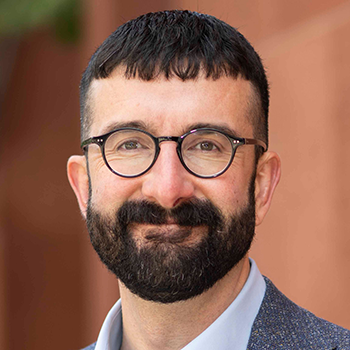
Alex Chohlas-Wood
Assistant Professor of Computational Social Science • New York University